
Wood-damaging pests
Carpenter bees in Lansing homes
Carpenter bees drill perfectly round holes into bare softwood (cedar, redwood and clear pine in trim, soffits, fascia and decks) to lay eggs. The damage builds up year after year in the same wood, so the fix is treating active holes and then sealing them.
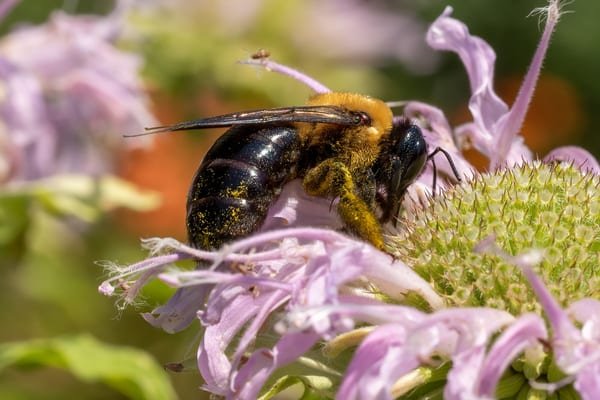
How to recognize carpenter bees
- Large bees that look like bumble bees, but the top of the abdomen is mostly bare and shiny black (a bumble bee’s is covered in hair, often yellow).
- Only females can sting, and they seldom do; males can’t sting.
- Bees hovering around eaves, decks or fascia boards in spring.
Signs you have them
- Neat, round holes in unpainted or weathered softwood.
When they show up in Michigan
Spring, when they look for nesting sites.
Are they harmful?
Structural damage to exposed wood accumulates over the years.
What you can do yourself
- MSU says an aerosol bee and wasp spray is usually enough for a few holes.
- Treat new holes, then fill or caulk them within two to three days.
- Painting or sealing the wood smooth can discourage them, but MSU says it doesn’t always work.
When to call us
When there are many holes across a deck, fascia or soffit, or they come back every year.
Related pests
- Bees: honey bee swarms and bees in walls.
- Carpenter ants: the other pest that tunnels into wood.
- Home pest control
Common questions
What are the bees drilling holes in my deck?
Carpenter bees. They drill perfectly round holes into bare softwood such as cedar, redwood and clear pine to lay eggs. They look like bumble bees, but the top of the abdomen is mostly bare and shiny black.
Do carpenter bees sting?
Rarely. Only females can sting, and they seldom do. Males can’t sting at all.
How do I stop carpenter bees coming back?
Treat active holes, then fill or caulk them within two to three days; MSU says an aerosol bee and wasp spray is usually enough for a few holes. Painting or sealing the wood smooth can discourage them, but MSU says it doesn’t always work.
Sources
Holes in your deck or trim?
Call or text, or send the form, and we’ll take a look.
Photo at the top: Rhododendrites, CC BY-SA 4.0
