
Services
Home pest control in Lansing
Ants, spiders, roaches, stinging insects and the fall invaders that pile onto siding every October. A one-time treatment, or regular pest control visits.
Pests this covers
Each pest has its own page in the pest library, with its sources.
- Ants Small ants trailing to food, usually from a nest outside. Baits beat sprays, slowly.
- Carpenter ants Large black ants nesting in damp wood. Seeing them indoors in winter points to a nest inside.
- Spiders Mostly harmless. Brown recluses are rare in Michigan; northern black widows are timid.
- Cockroaches German cockroaches in kitchens and bathrooms. Pepper-like droppings are often the first sign.
- Bed bugs Flat, reddish-brown bugs in mattress seams. Bites alone can’t confirm them, and bug bombs don’t work.
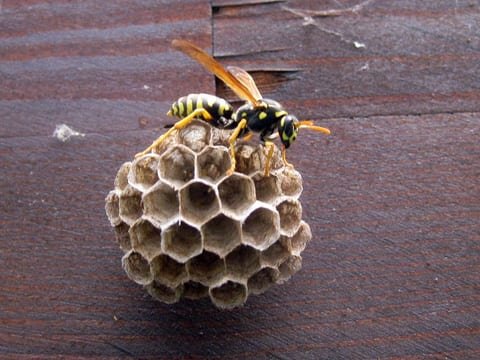
- Wasps Paper wasps build open, umbrella-shaped nests under eaves. Small exposed nests are the easiest stinging-insect job.
- Hornets Bald-faced hornets build gray, football-shaped nests. Big nests near doors are a job for a professional.
- Yellow jackets Nests in lawns and wall gaps, up to a couple of thousand wasps by late summer. Never plug a wall nest.
- Bees A swarm on a branch is a beekeeper’s job, often free. Honey bees inside a wall need a cutout.
- Carpenter bees Round holes in bare softwood: decks, trim, fascia. The damage builds up year after year.
- Boxelder bugs Michigan’s most common fall invader. Harmless; keeping them out beats spraying them.
- Stink bugs Brown marmorated stink bugs move in each fall. A bucket of soapy water deals with the ones inside.
- Asian lady beetles The “ladybugs” swarming houses in fall. They can pinch and stain; vacuum, don’t crush.
- Beetles in the house Pantry beetles in stored food, carpet beetles in wool and lint. Find the source; spraying doesn’t fix it.
- Silverfish Cool, damp basements and bathrooms. Drying the area out is the fix that lasts.
- Earwigs Damp mulch and leaf litter by the foundation, especially in wet summers. Harmless; vacuum the strays.
- House centipedes Fast, many-legged hunters in damp basements. Harmless, and they eat other pests.
- Millipedes They wander in from soil and leaf litter, often after rain, and die within days indoors.
- Crickets Camel crickets in damp basements, field crickets in fall. A heavy frost ends the field-cricket season.
Keeping pests out beats spraying them
For most of these pests, the university advice comes down to the same few things: keep them out, and fix whatever is drawing them in.
- Fall invaders (boxelder bugs, stink bugs, Asian lady beetles): seal gaps around windows, doors, siding and vents before fall, and vacuum the ones that get in. MSU doesn’t recommend indoor insecticides for lady beetles.
- Damp-area pests (silverfish, house centipedes, millipedes, earwigs, camel crickets): dry the space out. A dehumidifier, fixed leaks and better ventilation are MSU’s main fix for silverfish, and the same dampness draws the others.
- Ants: baits that workers carry back to the colony work better than spraying the ants you can see, and spraying the trail stops them carrying bait home.
- Cockroaches and pantry beetles: find the source. Store food sealed, fix leaks, and throw out an infested package rather than spraying the beetles in it.
How we handle it
On a regular pest control plan, if a covered pest shows up between scheduled treatments, we come back and treat it at no extra cost. If three of those extra treatments don’t solve it, we refund your last payment.
Free estimates before any work starts, for homes and businesses in and around Lansing.
There’s no price list, because every job is priced after a free estimate. The treatment for a given pest is the same whichever plan you’re on. What changes is how often we come, and that’s set for your home.
Not sure what you’ve got?
The pest library covers 26 common pests, with a guide to what shows up in each season. MSU’s Plant & Pest Diagnostics lab identifies insect specimens for a fee.
Common questions
What does home pest control cover?
Ants, spiders, cockroaches, bed bugs, stinging insects and the fall invaders such as boxelder bugs, stink bugs and Asian lady beetles. Each pest in the list above has its own page.
Is one treatment enough, or do I need a plan?
We offer both. The treatment for a given pest is the same whichever you choose. What changes is how often we come, and that’s set for your home.
Do you handle wasp nests?
Yes. Wasps are the call we get most, and April through October is the busy season for them. If you’re not sure what built the nest, the wasps, yellow jackets and hornets pages show the differences.
Do you remove honey bees?
No. We don’t remove or treat honey bees. For a swarm, or a colony living in a wall, call a beekeeper: the bees page explains how to find one.
Do you work for landlords and property managers?
Yes. We work for property management companies as well as homeowners.
Pests getting in?
Call or text, or send the form, and we’ll take a look.
Photo at the top: Wilhelm Zimmerling PAR, CC BY-SA 4.0
