
Stinging insects
Yellow jackets in Lansing homes
Yellow jackets usually nest underground, often in an old rodent burrow in the lawn, and a colony can reach one or two thousand wasps by late summer. Never plug the hole of a nest inside a wall: MSU warns the wasps will chew their way into the house instead.
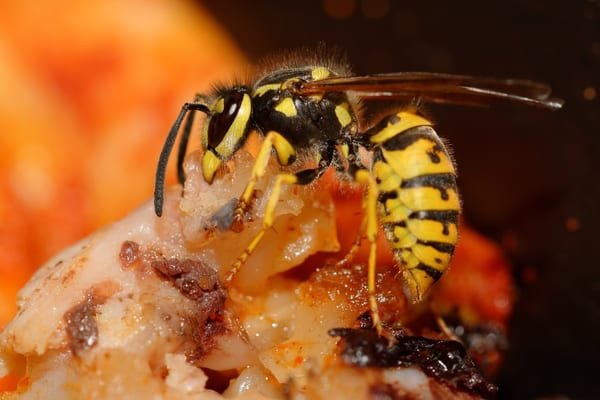
How to recognize yellow jackets
- Yellow-and-black wasps.
- A steady stream of wasps flying in and out of a hole in the ground, a wall gap or a shrub.
Signs you have them
- Wasps going into the ground in the lawn or a garden bed.
- Wasps coming out of a gap in siding, under a step, or around a vent.
When they show up in Michigan
Colonies are largest, and most defensive, in late summer and early fall.
Are they harmful?
Ground nests are easy to step on or mow over.
What you can do yourself
- MSU describes treating ground nests with an insecticidal dust at the entrance, early in the morning, leaving the opening uncovered so the wasps carry it in. Follow the label.
- Filling old rodent burrows in spring may discourage queens from starting nests.
- Never block the entrance of a nest inside a wall.
When to call us
Nests in walls, under steps, near doors, or anywhere people walk or mow; or if anyone is allergic.
Related pests
- Wasps: open, umbrella-shaped paper nests under eaves.
- Hornets: the large, gray, football-shaped nests.
- Home pest control
Common questions
Why are yellow jackets nesting in my lawn?
Yellow jackets usually nest underground, often in an old rodent burrow. By late summer a colony can reach one or two thousand wasps. Filling old rodent burrows in spring may discourage queens from starting nests there.
Should I pour something down a yellow jacket hole?
MSU’s method for ground nests is an insecticidal dust at the entrance, applied early in the morning, with the opening left uncovered so the wasps carry it in. Follow the label. A nest where people walk or mow, or any nest when someone in the house is allergic, is a job for a professional.
Can I seal a wasp nest in my wall?
No. MSU warns that if you plug the entrance of a nest inside a wall, the wasps will chew their way into the house instead.
Sources
Yellow jackets in the yard?
Call or text, or send the form, and we’ll take a look.
Photo at the top: Thomas Bresson, CC BY 3.0
