
Rodents and moles
Mice in Lansing homes
Mice move into Michigan homes every fall, looking for warmth and food, and can get in through a hole about the size of a pencil. Sealing the gaps they use matters more than anything else, and MSU advises against poison indoors because mice can die in the walls and smell.
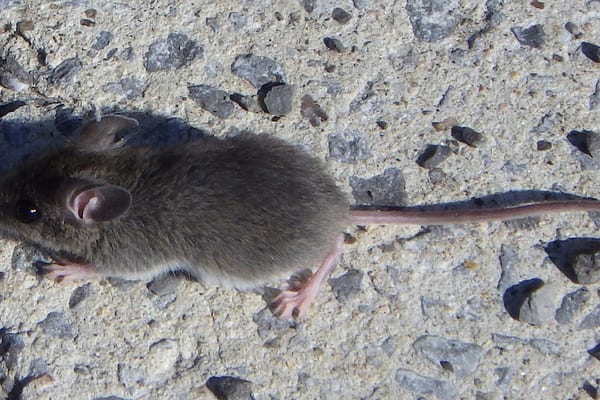
How to recognize mice
- House mice: small, pointed nose, large ears, long hairless tail about as long as the body; 5–8 inches including the tail.
- Deer mice also get into homes, sheds and cabins. The CDC names the deer mouse as the main carrier of the virus that causes hantavirus pulmonary syndrome.
Signs you have them
- Dark, pointed droppings about the size of a grain of rice, along walls and in cupboards and drawers.
- Chewed packaging or wiring; scratching in walls or ceilings at night.
When they show up in Michigan
Fall, as temperatures drop.
Are they harmful?
They can spread disease, trigger asthma in some people, and chew wiring (a fire risk). You can’t tell an infected mouse by looking at it, so the CDC says to treat all mouse droppings and nests as potentially infectious when cleaning up.
What you can do yourself
- Seal entry points before fall; a pencil-sized hole is enough.
- Remove outdoor attractions: straw bales and fall displays against the house, uncovered garbage, pet and wildlife food.
- Set several snap traps (MSU suggests six or more) along walls where mice travel, baited with peanut butter.
- Cleaning up droppings: don’t sweep or vacuum them (that puts particles in the air). Wear gloves, soak them with a bleach solution (1 part bleach to 9 parts water) or a disinfectant for 5 minutes, wipe up with paper towels and bin them (CDC).
- Skip ultrasonic and electromagnetic repellers: MSU says there’s no scientific evidence they work.
When to call us
When trapping isn’t keeping up, or you can’t find where they’re getting in.
Related pests
- Rats: how to tell rats from mice.
- Rodent control
Common questions
How do mice get into my house?
Through gaps as small as a pencil. They move in every fall looking for warmth and food, so seal entry points before then, and move straw bales, fall displays, uncovered garbage and pet or wildlife food away from the house.
Do ultrasonic mouse repellers work?
MSU says there’s no scientific evidence that ultrasonic or electromagnetic repellers work.
Should I use mouse poison?
MSU advises against poison indoors, because mice can die in the walls and smell. Snap traps work instead: MSU suggests six or more along walls where mice travel, baited with peanut butter.
Sources
Hearing mice in the walls?
Call or text, or send the form, and we’ll take a look.