
Damp-area pests
House centipedes in Lansing homes
House centipedes are fast, many-legged hunters that live in damp basements and crawlspaces. MSU considers them harmless and even beneficial, since they eat spiders and other small pests. Lots of them usually means a damp basement and something for them to eat.
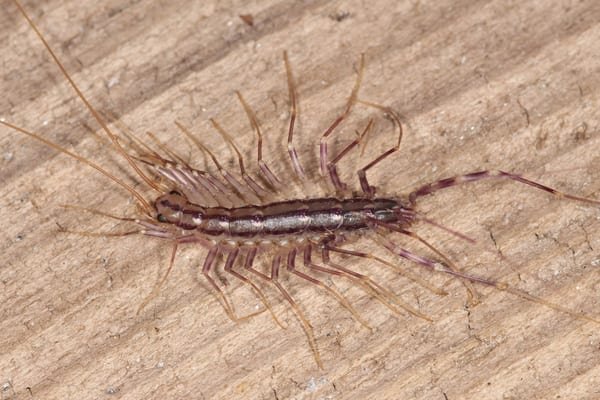
How to recognize house centipedes
- 1 to 1½ inches long, yellowish with three dark stripes, 15 pairs of long banded legs and long antennae.
Signs you have them
- Centipedes darting across basement floors or bathroom walls, mostly at night.
When they show up in Michigan
Year-round indoors.
Are they harmful?
Harmless to people and pets in practice.
What you can do yourself
- Dry out basements and crawlspaces: dehumidifier, and grade soil away from the foundation.
- Seal cracks in slabs and block walls, screen floor drains and sump covers, caulk around pipes.
- Their presence can point to other pests (silverfish, roaches, spiders); sticky traps show what’s around.
When to call us
If numbers stay high after moisture and other pests are dealt with.
Related pests
- Millipedes: the slow, many-legged ones that curl up.
- Silverfish: one of the pests centipedes feed on.
- Spiders: another basement hunter.
- Home pest control
Common questions
Are house centipedes dangerous?
No. MSU considers them harmless to people and pets in practice, and even beneficial, since they eat spiders and other small pests.
Why do I have centipedes in my basement?
A damp basement and something to eat. Dry it out with a dehumidifier and soil graded away from the foundation, seal cracks in slabs and block walls, and screen floor drains and sump covers. Sticky traps show which other pests they might be feeding on.
Sources
Too many centipedes?
Call or text, or send the form, and we’ll take a look.
Photo at the top: Holger Krisp, CC BY 4.0
