
Rodents and moles
Moles in Lansing lawns
Moles tunnel under Michigan lawns hunting earthworms, which make up about 80 percent of their diet, not plant roots. Trapping is the method MSU calls time-tested. Grub insecticides won’t get rid of moles, and using them for that is against the label.
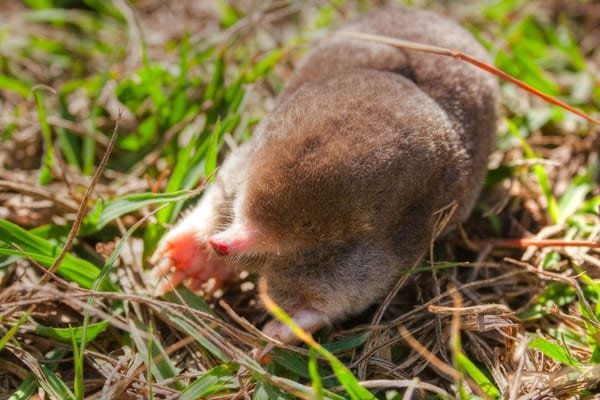
How to recognize moles
- Eastern mole: shallow raised tunnels you can follow across the lawn.
- Star-nosed mole: digs deeper, leaving periodic soil piles.
Signs you have them
- Raised ridges in the lawn; volcano-shaped soil mounds.
When they show up in Michigan
Most visible in spring and fall, when soil is moist.
Are they harmful?
Lawn and garden disruption; they don’t eat roots.
What you can do yourself
- Traps placed in active tunnels are MSU’s recommended method.
- Castor-oil repellents can push eastern moles out of an area.
- Don’t apply grub insecticide to kill moles: it doesn’t work and isn’t labeled for it.
When to call us
Not sure what you’re dealing with? Call or text and describe what you’re seeing.
Related pests
- Mice: the small rodents that move indoors in fall.
- Rodent control
Common questions
Do grub treatments get rid of moles?
No. Grub insecticides won’t get rid of moles, and using them for that is against the label.
What do moles eat?
Mostly earthworms, about 80 percent of their diet. They don’t eat plant roots.
How do I get rid of moles in my lawn?
Traps placed in active tunnels: the method MSU calls time-tested. Castor-oil repellents can push eastern moles out of an area.
Sources
Mole tunnels in the lawn?
Call or text, or send the form, and we’ll take a look.
