
Indoor pests
Fleas in Lansing homes
The common household flea is the cat flea. Most of the population isn’t on the pet at all: eggs, larvae and cocoons live in carpets and bedding. That’s why the pet and the house have to be treated at the same time, and why you’ll still see some fleas for a while afterward.
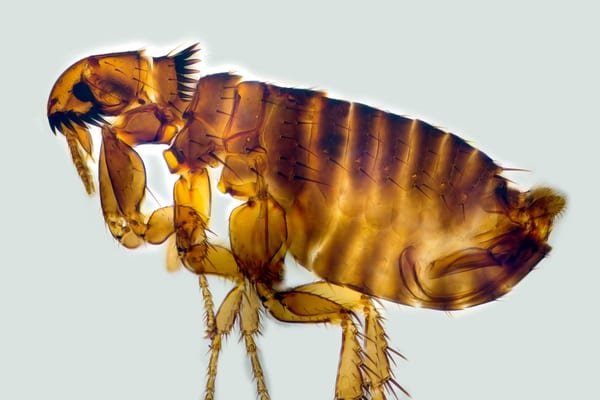
How to recognize fleas
- Tiny, dark, flattened jumping insects; “flea dirt” (dried blood) on pets and bedding.
Signs you have them
- Pets scratching; bites around ankles; flea dirt in pet bedding.
When they show up in Michigan
Year-round indoors; warm, humid weather speeds them up.
Are they harmful?
Itchy bites for people and pets.
What you can do yourself
- Treat every pet with a product from your veterinarian.
- Vacuum often, especially where pets rest, and empty or dispose of the bag.
- Wash pet bedding in hot water.
- No treatment kills fleas still in their cocoons, so more may hatch for a few weeks after treatment; keep vacuuming.
- Essential oils and ultrasonic devices aren’t effective.
When to call us
If fleas persist after treating pets and cleaning thoroughly.
Related pests
- Bed bugs: the other tiny indoor biter.
- Ticks: the outdoor biter pets bring home.
- Mosquito and tick control
Common questions
Why do I still have fleas after treating my pet?
Most of the flea population isn’t on the pet: eggs, larvae and cocoons live in carpets and bedding. No treatment kills fleas still in their cocoons, so more may hatch for a few weeks afterwards. Treat the pet and the house at the same time, and keep vacuuming.
How long does it take to get rid of fleas?
Expect to see some fleas for a few weeks after treatment, because fleas still in their cocoons keep hatching. Keep vacuuming, especially where pets rest, and wash pet bedding in hot water.
Sources
Fleas that won’t quit?
Call or text, or send the form, and we’ll take a look.
Photo at the top: Sam Thomas, CC BY-SA 2.0
